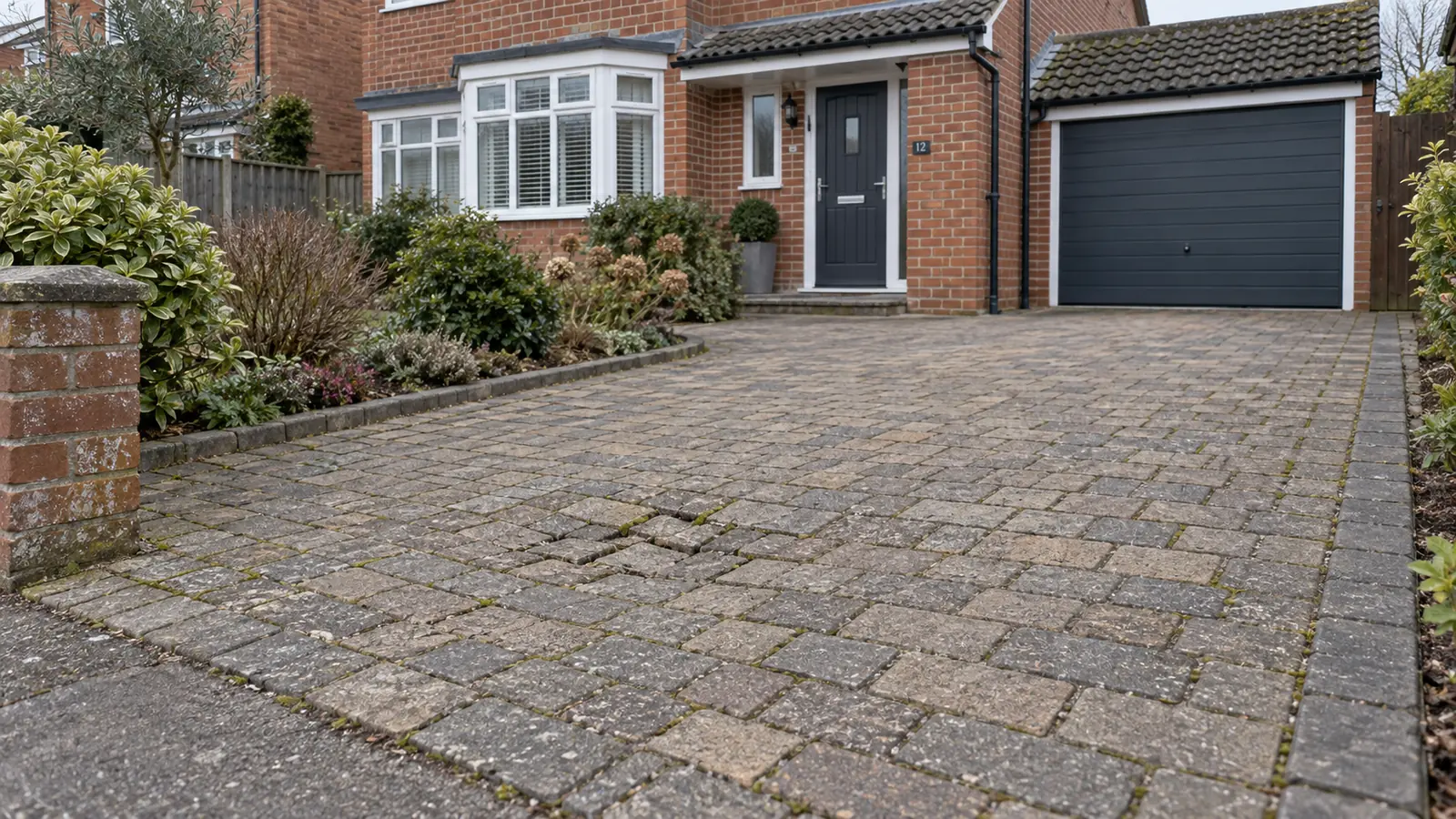
AI-generated driveway and sample illustration; it does not show a completed contractor project or identify specific products.
Resin bound and resin bonded are different surfacing systems. For a driveway where you want a relatively even stone finish and a permeable construction, a vehicle-rated resin bound system is usually the starting point. Resin bonded gives a rougher, scattered-stone appearance and needs a separate drainage solution. A quotation simply saying “resin driveway” leaves too much undecided.
Before choosing either, ask the installer to identify the product, assess the supporting base and explain where rainwater will go. The right answer depends on your parking area and how you use it, rather than the name or colour alone.
Resin bound vs resin bonded: the essential difference
With resin bound surfacing, aggregate is mixed with resin before being spread and trowelled into place. With resin bonded surfacing, resin is applied first and aggregate is scattered over it. Bound surfacing has spaces between the coated stones that can let water through; the resin layer beneath bonded aggregate makes that finish impermeable.
Manufacturer Resin Mill explains the two application methods. Its guidance also distinguishes UV-stable and non-UV resin: confirm the binder being specified if changes in colour would concern you. A sample blend name alone does not identify the resin.
| Question | Resin bound | Resin bonded |
|---|---|---|
| How is the stone applied? | Mixed with resin before laying | Scattered onto an applied resin layer |
| What finish should you inspect? | A relatively even, trowelled aggregate surface | A more exposed, gravel-like texture |
| Does water pass through the finish? | It can, but the supporting construction must also be designed for drainage | Do not assume it does; ask for a surface-water plan |
| What belongs in the quotation? | Named system, vehicle suitability, base, depth and drainage | Named system, approved use, base and drainage |
Treat those differences as a way to question a proposal. They do not establish that every product in either category is suitable for every driveway.
Decide around your parking and access needs
Describe the actual use before discussing colours. Is the drive for one car, several vehicles or a heavier van? Does the entrance involve a tight turn? Will a wheelchair, pushchair or wheeled bin regularly cross the surface? Ask the contractor to address those details in the specification.
If bonded surfacing is proposed for parking, request the manufacturer's written confirmation that the exact system is suitable for the intended vehicle use. A photograph of a similar-looking driveway is useful for appearance, but it is not that confirmation.
For an accessible route to the front door, inspect a representative sample and, where possible, an existing installation. Discuss texture, gradients and transitions together. A small smooth sample says little about a steep entrance or an awkward step at a gate.
Keep the practical brief short: vehicles, turning space, pedestrian route and any clearance problems. Give the same brief to each business so you can compare its response.
Permeable resin needs a complete drainage design
Think beyond the wearing surface. Water passing through a resin bound layer still needs somewhere to go beneath it. Ask for a sketch showing the supporting layers and the intended route for rainfall. If an existing base will remain, ask how that changes the drainage proposal.
The government's guidance on permeable front gardens describes both permeable paving and directing runoff to a suitable garden area or soakaway. Soil, slopes and existing waterlogging affect the choice.
For houses in England, front-garden hard surfacing over five square metres generally needs planning permission if it is impermeable and runoff is not directed to a permeable area within the property. Restrictions can alter permitted development rights. Confirm your position with the planning authority; the English rule should not be applied automatically in Wales, Scotland or Northern Ireland. A dropped kerb or other associated work can require separate consent.
If the proposal relies on the word “SuDS”, ask the firm to explain the whole arrangement. SuDS means sustainable drainage systems; it is not a substitute for a site-specific explanation.
Check whether the old base is worth keeping
Ask each installer to state what it inspected, what it proposes to retain and what it would remove. Photograph cracks, sunken areas, standing water and the junction with the pavement before the survey. Do not try to diagnose those defects yourself; use the photographs to ensure they are discussed.
An overlay proposal should explain the finished height at garage doors, gates, inspection covers and the house. Ask how existing joints and defects will be treated and what happens if excavation reveals unsuitable construction. A provisional allowance is easier to assess when its trigger is written down.
Our guide to driveway repair or replacement helps frame the wider decision about retaining an existing driveway. For this comparison, the key question is whether both quotations price the same amount of preparation.
Compare the complete job, not just the surface price
Put quotations beside one another and mark the items each includes: measured area, removal and disposal, supporting layers, resin system, edging, drainage, inspection covers and making good. Ask whether VAT is included and identify any provisional sums.
For example, one firm might price a finish over the current base while another includes removal and reconstruction. The totals describe different jobs. Ask for the reason behind each approach before deciding that one material is cheaper.
Request written product and workmanship warranty terms separately. Identify who provides each, what maintenance is required and who you contact about a defect. Ask for the installation timetable and the conditions that could delay it, including when walking and parking can resume.
The article on why driveway installation prices vary explains the broader scope differences. Here, your priority is getting two clearly named systems and comparable construction proposals.
Allow for cleaning and everyday upkeep
Neither finish should be bought on a promise that it will never need attention. SureSet's resin bound aftercare guidance recommends removing fallen leaves and explains that decaying debris can stain paving and create a slippery surface. Its guidance also recognises that ice can still form.
Ask for the cleaning instructions for your chosen product, including suitable equipment and treatments. Flag shade, nearby trees and soil washing from borders during the survey. Keep the aggregate and binder details with your paperwork so a future repair enquiry starts with the right information.
How to compare resin driveway proposals in four steps
You need photographs, rough dimensions, notes about vehicle and pedestrian use, and written quotations. This is preparation for a professional survey and purchase, not a DIY laying guide.
1. Record what the driveway must do
Photograph the entrance, parking area, house junctions and any defects. Note vehicles, turning movements, access needs and places where water collects. Give every installer the same information.
2. Ask for a named system and construction proposal
Request the manufacturer, product, bound or bonded method, intended use, proposed depth and supporting layers. Have the contractor explain the drainage route and any permissions to check before work starts.
3. Resolve differences between quotations
Compare measured areas, groundwork, disposal, edging, drainage and VAT. Ask why one firm retains a base that another removes. Get revisions in writing so the final totals have a clear scope.
4. Confirm the finish and handover details
Approve a representative sample and record the selected blend and binder. Confirm payment stages, curing instructions, aftercare and warranty providers before accepting the quotation. Keep the final specification with the invoice.
Frequently asked questions
Can you tell bound and bonded apart from a photograph?
Texture can offer a clue, but request the product name and application method in writing. Similar stone colours can make different systems look alike in photographs.
Does a resin bound driveway automatically solve drainage problems?
No. Ask how water will move through or away from the whole construction. A permeable finish alone does not explain the performance of the supporting layers or the ground below.
Is resin bonded always the cheaper option?
Compare complete written scopes. A lower surface price may be outweighed by different preparation, drainage or remedial work. Ask each firm to identify exclusions and provisional allowances.
Should a colour sample be the final deciding factor?
Use it after confirming suitability, construction and drainage. Check the sample outside beside the house, then record both the blend and the resin product in the accepted specification.
Find specialists for a site-specific proposal
If a bound system fits your brief, you can enquire about resin bound driveways through Resin Bound Pavings. It is a referral service connecting homeowners with independent specialists; you agree the work and warranty with the chosen contractor. Use your brief to request a survey and a written proposal, then compare what each business has actually included.