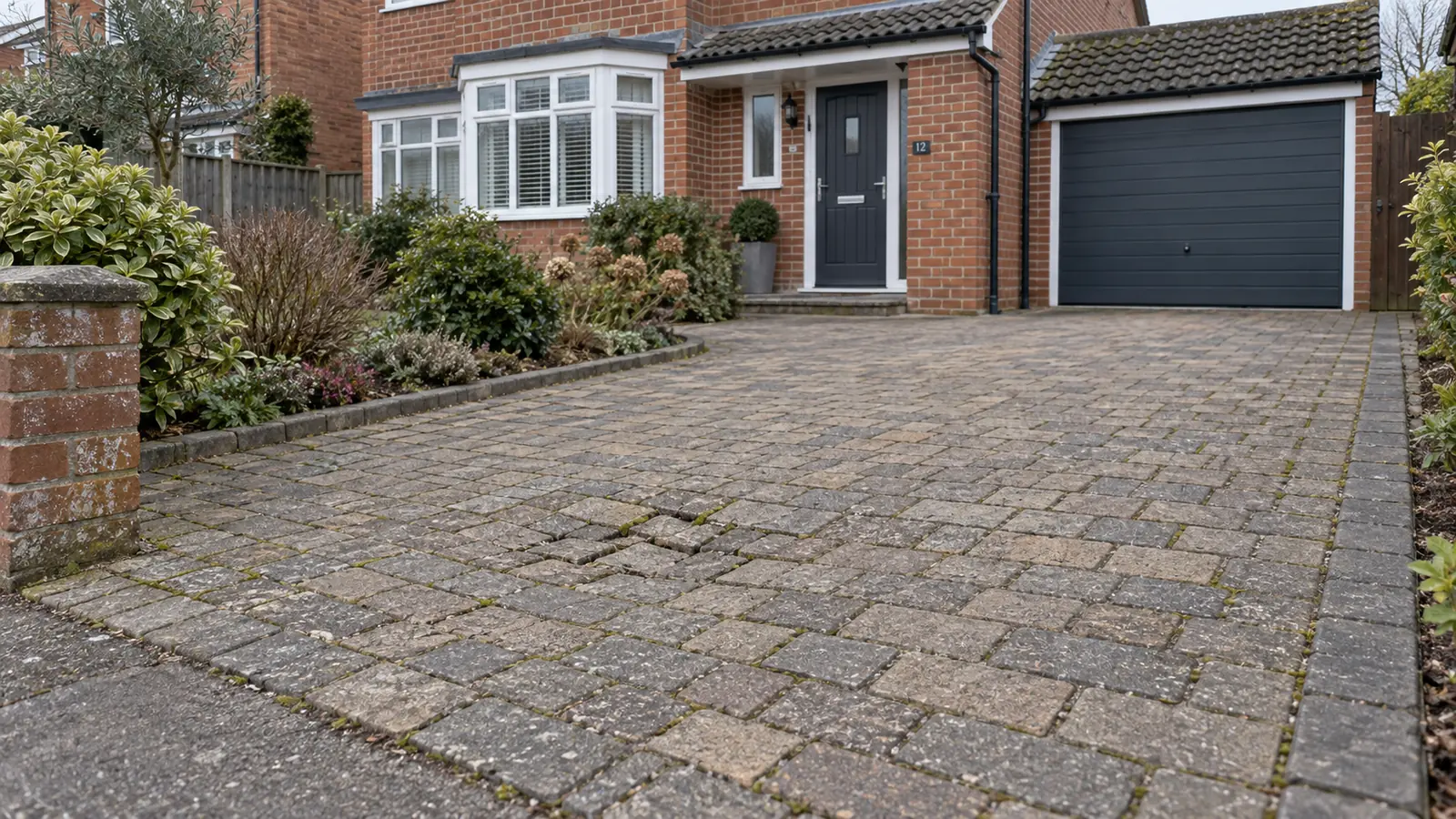
AI-generated illustration of a newly laid block-paved driveway.
Two driveway quotes can differ substantially even when they cover the same area and name the same surface. The difference is often beneath the finish: one contractor may allow for excavation, a new compacted base, drainage and waste removal, while another has priced an overlay on the existing construction. Before comparing totals, check that each proposal describes the same job.
The most useful question is not simply “How much per square metre?” It is “What will be built for that price, and which work is excluded?” The seven factors below will help you find the answer.
1. The size and shape of the area
Measure the approximate length and width to give contractors a starting point, then ask them to confirm the measured area on site. A small driveway can have a higher cost per square metre because machinery, deliveries and labour still need to be arranged. Awkward corners, narrow strips and changes in level can also take longer to finish than a simple rectangle.
Check whether the quoted area includes a path, entrance apron, turning space or an extension. A difference of only a few square metres can make two totals look less comparable than they really are.
2. What must be removed first
Installing over a sound existing base is a different project from converting a front garden or replacing a failed driveway. Breaking out old paving, excavating soil and taking waste away add work before the new surface starts.
Ask which existing layers will stay, why they are suitable and what happens if the contractor finds soft ground. Our guide to repairing or replacing a driveway explains when a new surface may be enough and when deeper work deserves investigation.
3. The sub-base and its preparation
The sub-base spreads vehicle loads and supports the finished surface. Its design depends on the ground, the material above it and the vehicles using the driveway. A quote that says only “hardcore included” leaves important questions unanswered: what aggregate is proposed, how much will be installed, and how will it be compacted?
Do not assume the deepest-sounding specification is automatically best. Ask each contractor to explain the proposed build-up for your site and to state what is included in writing. The Federation of Master Builders' driveway cost guidance identifies groundwork, drainage, access and edging as major reasons final quotes vary.
4. Surface material and finish
Gravel, asphalt, concrete, block paving and resin bound finishes involve different materials and installation methods. The choice also affects edging, maintenance and how the complete driveway handles rainwater. Even within one material, a plain finish and a decorative pattern can have different labour and material costs.
Make sure the quote identifies the actual product or surface specification. “Resin driveway”, for example, is too vague to show whether the proposed base and drainage work suit the system. If you are considering a dark bound finish, our explanation of asphalt and tarmac driveway terminology may help you ask clearer questions.
5. Drainage and finished levels
The installer needs to show where rainwater will go. A channel drain is only useful if it connects to an appropriate destination; a permeable finish only works as intended when the construction beneath it also provides a suitable route for water. Finished levels should avoid sending water towards the house, a neighbour or the pavement.
In England, government guidance on front-garden surfacing says a new or replacement driveway can generally be laid without planning permission under these rules if the surface is permeable or runoff drains to a lawn or border. Traditional impermeable surfacing over 5 m² generally requires permission when it does not direct runoff to a permeable area. Check the local position, especially outside England or where other restrictions apply. A separate dropped kerb or vehicle crossing may also need highway approval.
6. Edging, access and making good
Secure edging helps keep a driveway's shape and supports the surface. A quote may include simple kerbs, decorative block borders or no new edging at all. Steps, wall changes, gate posts and adjoining paths can also affect the work.
Restricted access may mean smaller machinery or more manual handling. Ask how materials and spoil will move in and out, and whether the contractor will protect and reinstate nearby paving, planting and boundaries.
7. What the written price includes
A low total is not a saving if essential work is missing. Compare the scope, not just the headline number. The table gives you a short list to use with every contractor.
| Check in each quotation | What to ask |
|---|---|
| Groundwork and waste | Which existing materials will be removed, and is disposal included? |
| Construction | What base, surface layers, edging and compaction are specified? |
| Water management | Where will runoff go, and is any drain or soakaway included? |
| Finishing | Are paths, steps, borders and making good included? |
| Commercial terms | Is VAT included, how are changes agreed, and what is the payment schedule? |
For example, one quote for block paving might include full excavation, disposal, a new base and a drainage channel. Another might assume the present base can remain and exclude the channel. Comparing only the two totals would hide the difference in work. Ask the second contractor to price the missing items, or ask both to quote the same specification.
If you want to gather site-specific quotations, driveway installation prices can be a starting point. Get Driveway Prices says it may pass an enquiry to up to four independent contractors, subject to availability. The contractors assess the job and provide their own quotes; still check each proposed scope, insurance and terms yourself.
How to prepare for comparable driveway quotes
You will need approximate measurements, a few clear photos and a short description of how you use the space. This is preparation for a contractor's assessment; there is no need to excavate or lift paving yourself.
1. Describe the job and existing surface
Note the approximate area, current material, visible sinking or standing water, and whether you want a new driveway, replacement or extension. Mention the vehicles that will use it.
2. Agree the same questions for each visit
Ask every contractor about removal, the proposed base, drainage, edging, access and making good. Show each person the same areas of concern so their proposals start from a similar brief.
3. Request an itemised written scope
Ask for materials, work stages, exclusions, VAT treatment, expected duration, payment terms and how unexpected ground conditions will be handled. Confirm who is responsible for any necessary approvals.
4. Compare and resolve differences
Read each scope alongside its total. Where specifications differ, ask why and request a revised price for a common scope before choosing a contractor. Agree any later changes in writing.
Frequently asked questions
Is the cheapest driveway quote necessarily poor value?
No. It may reflect an efficient method or a genuinely sound existing base. First check that it includes the same essential work, drainage and finishing as the other quotes.
Can a contractor give a final price from photos alone?
Photos can help with an initial discussion, but ground condition, access, levels and drainage often need a site visit. Treat an early figure as indicative until the scope and price are confirmed in writing.
Should every quote state a price per square metre?
It can help with a broad comparison, but the total and written specification matter more. The rate may cover different amounts of excavation, base construction or drainage.
What if the ground is worse than expected once work starts?
Ask the contractor to show you the issue, explain the proposed fix and give a written price and time impact before extra work proceeds. The original quote should explain how unforeseen conditions will be handled.
Take the next step
Choose the driveway specification that deals with your site's ground and water, then compare written quotes for that same scope. A clear answer about what lies beneath the finish is usually more useful than a headline rate alone.