

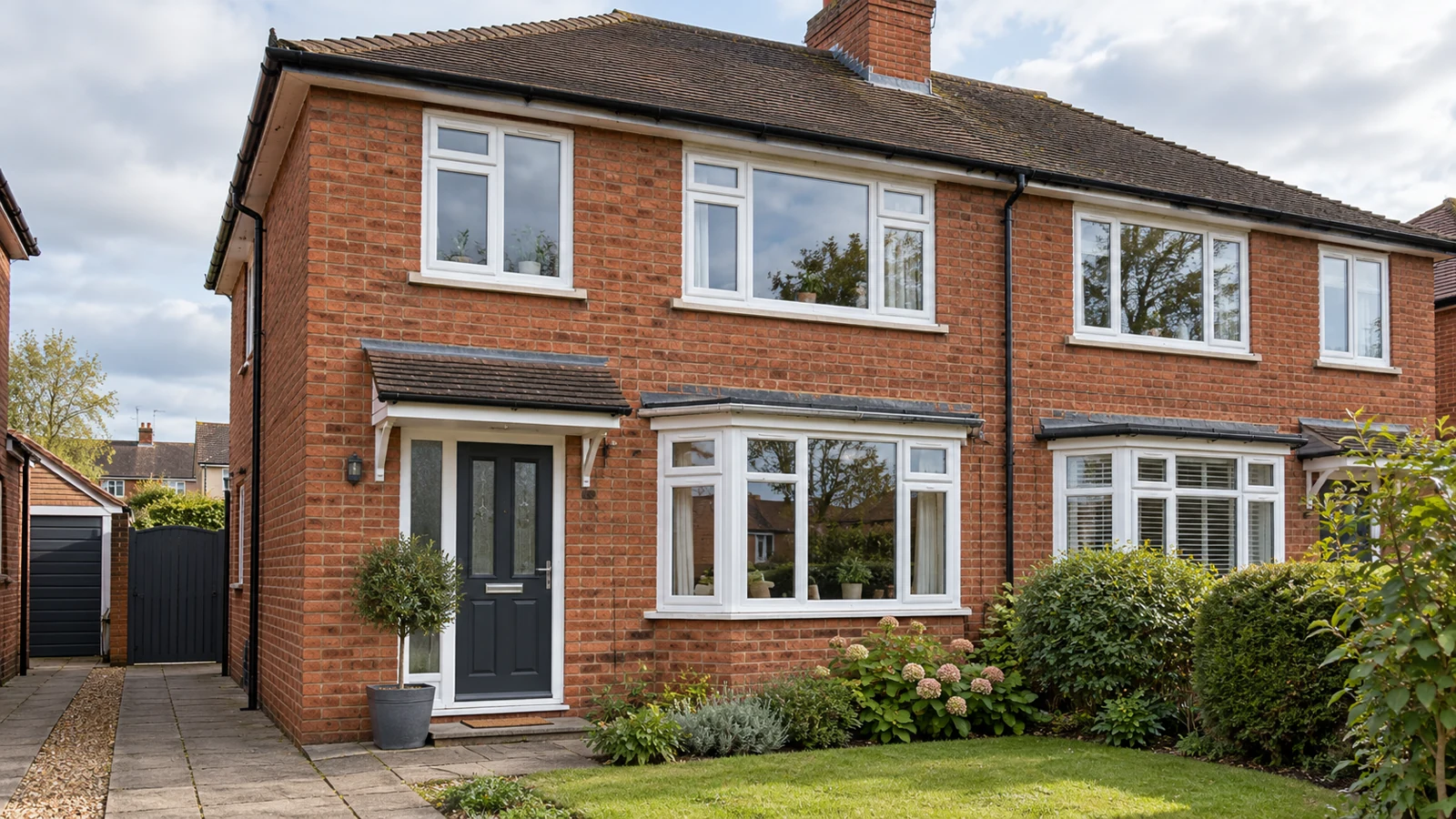
You can replace windows in stages if the remaining windows are serviceable and each phase is properly surveyed and specified. Doing the whole house at once can simplify matching, access and finishing, but it also means a larger immediate commitment. The right choice depends on the condition of individual windows, your budget and other work planned for the property.
Start by asking which openings genuinely need replacement. One failed glass unit does not automatically justify new frames throughout the house. Equally, repeatedly patching several deteriorating windows can leave you paying for visits without resolving the wider problem.
Featured image: AI-generated illustration of a British home, not a photograph of a completed installation.
Which windows should you replace first?
Make a room-by-room list of the problems you want to solve. Record a stiff handle, a draught around an opening sash, moisture between the panes or water around the reveal separately. These symptoms can need different remedies, so avoid giving every window the same diagnosis.
A window that will not close securely, damaged glazing or active water entry deserves prompt professional assessment. Do not leave an urgent defect unattended simply because its room sits in a later phase. Keep away from damaged glass and do not force a jammed mechanism.
For less urgent problems, ask the surveyor to distinguish three options: adjustment or repair, replacement of the sealed glass unit, and a complete new frame and glazing. The Energy Saving Trust’s window guidance explains that condensation between panes can indicate failed double glazing and that replacing the glazing alone may be possible. Moisture on the room-facing surface is a different issue and deserves a ventilation assessment.
Prioritise confirmed defects and the rooms where poor performance affects daily life most. A regularly used bedroom may matter more than a spare room, but a cosmetic preference should not outrank a window that is leaking. Ask whether a proposed repair offers a useful service life or merely postpones an unavoidable replacement.
Replace windows in stages or all at once?
| Approach | When it can suit | What to check |
|---|---|---|
| One or two openings first | Problems are concentrated in a few windows and others remain sound. | Minimum job charges, repair alternatives and availability of matching products later. |
| One room or elevation at a time | You want to spread disruption or coordinate with decorating. | Whether shared access and matching visible windows make this a sensible group. |
| Whole-house replacement | Most windows need work and the budget is available. | The full scope, access arrangements, installation sequence and making good. |
Grouping windows on the same elevation can keep the street-facing appearance consistent. Grouping by room can work better when plastering, blinds and decoration are the main concern. Neither approach is automatically cheapest: ask the installer to price the groupings you would actually consider.
Some openings need separate planning regardless of the programme. A bay, a window above a conservatory or an opening being altered may involve different access or building work. Have these assessed before treating them as ordinary units in a package.
Why phased replacement can cost more overall
Spreading the work reduces the amount you need for the first phase, but it does not necessarily reduce the final bill. Survey visits, deliveries, site protection, access equipment and waste collection may have to be arranged again. Ask which charges are fixed per visit and which change with the number of openings.
Request two written scopes from each firm: the full project and the first realistic phase. For the phased option, ask for an explanation of likely repeat charges and whether later prices are firm or merely indicative. Do not assume a quotation issued today fixes the price of an order placed next year.
A whole-house discount is useful only when you compare equivalent products and work. Check the installed total, VAT treatment, removal and disposal, trims, window boards, plaster repairs, decoration exclusions and any access costs. A low headline figure with several provisional items is difficult to compare with a complete price.
Keep a separate allowance for your own finishing work. New curtains or blinds, repainting and moving furniture can affect the practical budget even when they are outside the glazing contract. Our guide to budgeting for home improvements before getting quotes helps you organise these costs alongside the main installation.
How to avoid mismatched windows in later phases
“White uPVC” is not a complete specification. Frame profiles, sightlines, opening proportions, handles, glazing bars and surface finishes can differ. Two windows of similar overall size may look noticeably different if the glass area or position of a transom changes.
Ask for a window schedule that identifies each opening and records the product range, finish, opening arrangement, hardware and glass specification. Keep approved drawings and the final order confirmation. If you want a consistent front elevation, discuss completing that elevation together rather than relying on an exact match remaining available indefinitely.
Obscure bathroom glass also needs an agreed pattern and privacy level. For different rooms, specify performance needs separately: reducing heat loss, managing overheating and reducing traffic noise are not interchangeable goals. Ask for performance evidence for the product actually being quoted, and clarify whether a thermal figure describes the glass or the complete window.
No supplier can sensibly promise that every colour, profile and handle will remain available forever. Get any availability commitment in writing and decide how much visible variation you could accept if your second phase is delayed.
Ventilation, permissions and paperwork still matter
A small phase still needs proper design. Discuss background ventilation, existing extract fans and any escape opening before placing the order. Do not assume replacing only a bedroom window means ventilation can be ignored, or block new ventilators to address a draught complaint.
For England, Approved Document F guidance is a starting point. The applicable edition depends on the standards and transitional arrangements covering the work; ask the installer to explain the basis used. Wales, Scotland and Northern Ireland have their own requirements, so confirm the local route rather than applying English guidance everywhere.
Ask how each completed phase will be documented. FENSA’s homeowner guidance distinguishes qualifying replacement installations from repairs where the frame is not included. Do not expect the same certification for a glass-only repair and a complete replacement, or treat a certificate as a substitute for the installer’s written guarantee.
Where a home is listed, in a conservation area, leasehold or subject to restrictions, check the necessary consents before ordering. Splitting the purchase into smaller jobs does not remove those considerations. Keep the paperwork for each phase together, with the openings it covers clearly identified.
How to plan a phased window replacement
You will need a phone or camera, a notebook and any existing window guarantees or drawings. This is a planning process for a professional survey, not a guide to measuring manufacturing sizes or removing glazing. Photograph only from safe, accessible positions.
- List the openings. Give each window a room name and reference, photograph it safely and note the problem you want resolved.
- Separate urgent work from preferences. Arrange prompt assessment of insecure, damaged or leaking windows and ask which other defects can be repaired.
- Choose two realistic scopes. Ask installers to quote for the full project and a first phase that fits your budget and decorating plans.
- Agree a shared specification. Record frames, finishes, opening layouts, glass, ventilation, access, making good and the paperwork for each phase.
- Compare totals and commitments. Check repeat charges, VAT, exclusions, payment stages, guarantees and how long prices remain valid before agreeing an order.
For example, a household might prioritise two defective bedroom windows while retaining sound downstairs windows. The survey could support that plan, or reveal that one bedroom only needs a glass unit. Use the findings to refine the scope before seeking a package price; the example is a planning scenario, not a diagnosis of your home.
Frequently asked questions
Can I replace just one window?
Yes, subject to a survey and any relevant permissions. Ask for the complete fitted price, including access and finishing, because the cost will not necessarily be a simple fraction of a whole-house quotation.
Should all the new windows have the same glass?
Not necessarily. A bathroom may need obscure glass, while another room has different noise or solar-control needs. Ask the installer to specify suitable glazing for each opening while keeping the appearance coherent.
Will a deposit reserve the price of later phases?
Only rely on what the written contract explicitly covers. Check which openings you are ordering, the price validity, payment milestones and what happens if you delay the remaining work.
Is winter a reason to postpone every replacement?
Discuss weather, temporary protection and the fitting sequence with the installer. Season alone should not decide the programme, especially if a window is unsafe or allowing water into the home.
Get prices for the work you actually need
Prepare your window list, decide which rooms matter first and ask for comparable written scopes. You can request double glazing quotes for the proposed work through the linked referral service, which introduces homeowners to independent glazing businesses. Confirm each responding firm’s survey findings, specification and terms before choosing an installer.
