If your air conditioning is not heating, first check that the system supports heating, that heat mode is selected and that the target temperature is above the room temperature. A pause at start-up or during defrost can be normal. Persistent loss of heat, a recurring error or unusual behaviour needs investigation rather than repeated resets.
This guide is for fixed, reversible air conditioning in UK homes, often called air-to-air heat pumps. The operating manual for your exact model takes priority. Cooling-only equipment and portable units may work differently.
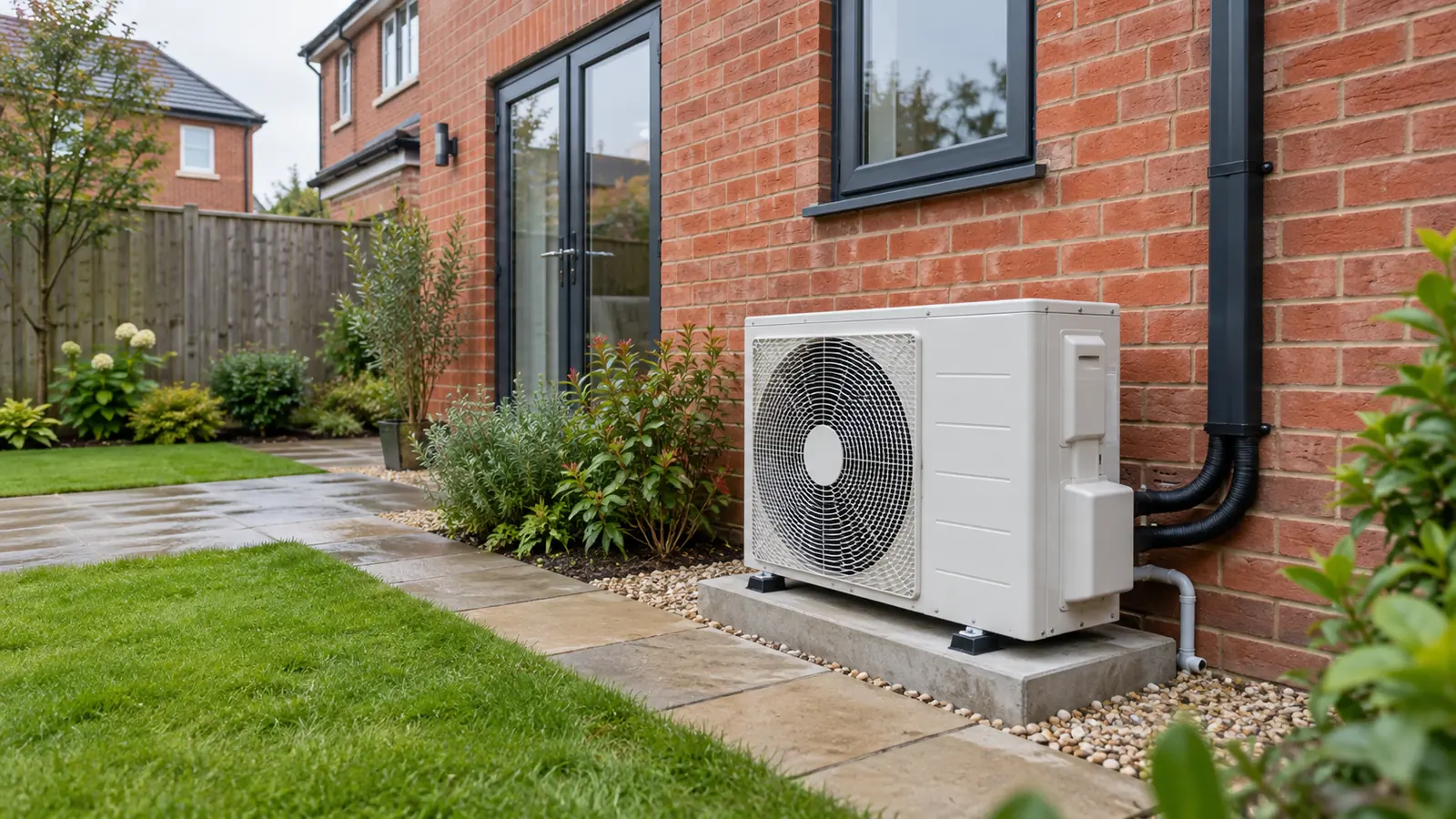
AI-generated illustration of a home air conditioning unit; this is not a completed contractor project.
When a heating pause can be normal
A reversible system does not necessarily deliver warm air as soon as you press the button. Daikin explains that a warm-up period before the indoor fan starts helps avoid an initial cold draught. Its length varies with conditions and equipment, so use your manual rather than a universal countdown.
In cold, damp weather, an outdoor coil can develop frost. The system may interrupt room heating to clear it. Daikin also explains that outdoor water or steam can accompany defrost. That does not explain water dripping from the indoor unit.
The useful distinction is whether the system resumes effective heating. Record the pattern: a temporary interruption followed by a warming room is different from repeated interruptions with no recovery. Do not chip ice off the coil or pour hot water over the equipment.
| What you notice | Possible explanation | Useful next action |
|---|---|---|
| No airflow just after selecting heat | A normal warm-up delay | Check the manual and observe whether warm airflow begins. |
| Heating pauses, then returns | Defrost or temperature control | Record the duration and whether the room continues warming. |
| One room stays on standby | Settings or a shared-system mode conflict | Check other indoor units and the system instructions. |
| Weak heating continues | Restricted airflow, controls or a fault | Make the safe checks below, then arrange diagnosis if unresolved. |
| Error returns or protection trips | A fault requiring investigation | Record the indication and seek professional advice. |
Air conditioning not heating: safe checks first
Confirm the model and mode
Look for heating capability in the equipment specification. A remote control may serve several models, so a sun symbol on the handset alone is not proof. Select the heating mode described in the manual; fan-only mode circulates air without actively warming it.
Set a sensible target above the current room temperature and check timers, holiday settings and schedules. Note what you change. Turning the target to its maximum is not a substitute for finding out why a system fails to respond.
Check other rooms on a shared outdoor unit
If several indoor units share one outdoor unit, their settings can affect each other. Many domestic multi-split systems cannot heat one room while cooling another. Use compatible modes as instructed by the manufacturer. If you do not know which units share equipment, ask the installer instead of experimenting with service settings.
Look for straightforward airflow restrictions
Keep curtains and furniture clear of the indoor inlet and outlet. Check user-accessible filters only as the manual allows, with the unit stopped and any required isolation completed. Do not reach into the fan or remove electrical covers. If access needs a ladder or the filter procedure is unclear, leave it to a professional.
From ground level, look for leaves or stored items obstructing the outdoor unit. Keep clear of moving parts and sharp fins. Persistent blockage, awkward access or concerns about clearance are reasons to request help. Our guide to outdoor air conditioning unit placement explains why the surrounding space matters.
When to stop checking and call an engineer
Arrange diagnosis if the system remains unable to heat after the permitted user checks, repeatedly displays an error or no longer performs as it previously did. Stop using it and seek professional advice for a burning smell, smoke, severe new noise, indoor water leakage or a repeatedly tripping protective device. Do not keep restoring power to force it to run.
A cold room does not identify a failed component. Ask the engineer to distinguish between a controls issue, restricted airflow, a refrigerant problem and equipment that cannot meet the room’s heating demand. A recently extended room or changed layout may require a capacity review; a previously effective unit that has deteriorated needs its fault investigated.
Refrigerant handling is professional work. For relevant F-gas activities, check the technician’s qualifications and the business’s applicable certification. GOV.UK explains the qualifications required for F-gas work. Requirements depend on the task and equipment, and the guidance distinguishes Great Britain from Northern Ireland. Routine user filter care is different from opening the refrigerant circuit.
How to prepare a useful repair enquiry
You need the equipment paperwork or safely accessible model labels, the operating manual and somewhere to record observations. A phone camera is useful. No diagnostic tools or dismantling are needed.
- Identify the equipment. Find the indoor and outdoor model numbers in your paperwork or on safely accessible labels. Check that the system supports heating and locate its operating manual.
- Record the settings. Note the room temperature, selected mode, target temperature, timer settings and which other indoor units are running.
- Observe without dismantling. Note when the pause starts, whether heating returns, any displayed code and the weather. Take photographs from a safe position; do not remove service covers.
- Send a clear enquiry. Provide the model details, observations, service history and access information. Ask what the diagnostic visit includes, its charge and whether repair work requires separate approval.
Agree whether a call-out charge includes diagnosis, how long it covers, whether VAT applies and how further labour or parts will be authorised. A free online quotation enquiry does not necessarily mean a free on-site investigation. Ask for the findings in writing, including any recommended follow-up and the terms of a repair warranty.
Repair the fault or consider replacement?
Start with the diagnosis. A clearly identified repair to otherwise suitable equipment deserves consideration. Replacement becomes a more useful comparison when faults recur, suitable parts are difficult to obtain or the existing system cannot serve the space adequately.
Compare complete scopes rather than a repair part against an entire new installation. A replacement proposal should explain removal, installation work, electrical requirements, commissioning and warranty terms. Our guide to comparing air conditioning quotes helps you check those inclusions.
Frequently asked questions
Can every air conditioner heat a room?
No. Check the exact model specification and operating manual. A cooling-only unit will not provide heating, even if a shared remote control has a heat symbol.
Should I keep resetting an air conditioner that will not heat?
No. Record the fault code and follow the model manual. Repeated resets can obscure useful information, and a repeatedly tripping protective device needs professional investigation.
Does a heating fault mean the unit needs regassing?
Not necessarily. Settings, airflow, controls and component faults can produce similar symptoms. Ask for diagnosis before agreeing to refrigerant work.
Can one room heat while another cools on a multi-split system?
That depends on the system. Many domestic multi-splits require connected indoor units to use a compatible operating mode. Check the manual or ask the installer before treating a standby indication as a fault.
Arrange diagnosis with a clear brief
If heating has not returned, gather the model details and observations before seeking air conditioning repairs. Explain that the problem occurs in heating mode and ask the attending business to confirm its diagnostic charges and relevant credentials before you book.