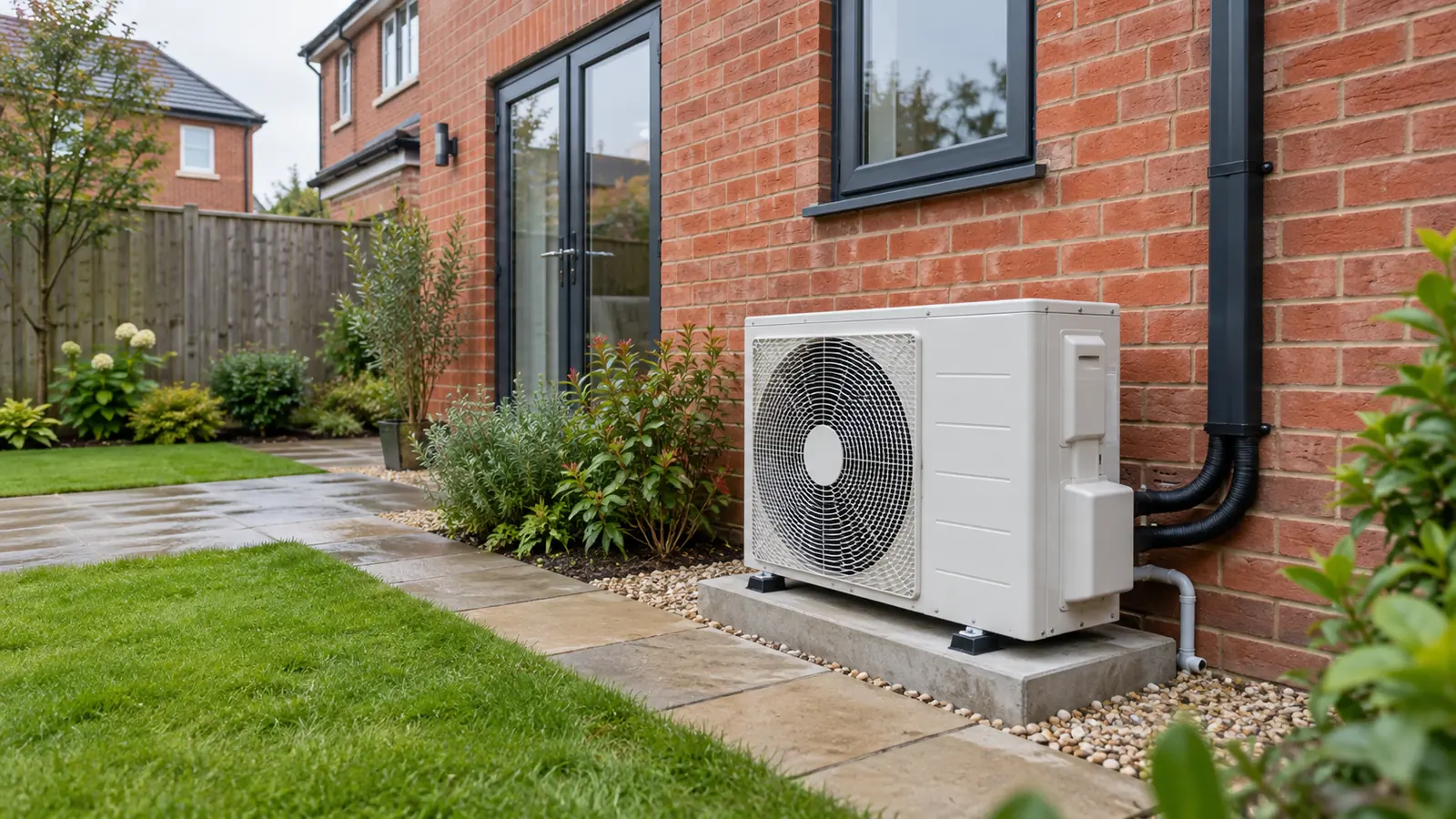
AI-generated illustration of a home air conditioning installation and sample paperwork.
Two air conditioning quotations can differ by hundreds of pounds yet describe very different installations. Before choosing one, compare the proposed equipment, where it will go, what work is included and what happens after installation. The cheapest total is only meaningful when each installer has priced the same job.
This guide is for UK homeowners seeking a new fixed split system, usually a wall unit indoors connected to an outdoor unit. A survey matters: room size alone does not establish the right capacity, and a rough online estimate is not a final specification.
Start with one clear brief
Tell each installer which rooms need cooling, how they are used, whether you want heating too, and where you might accept indoor and outdoor equipment. Mention a loft room, large glazing, a home office with equipment, a flat, or difficult access. Share any known leasehold, conservation or neighbour constraints. Give everyone the same brief so differences in their proposals are easier to understand.
You can seek air con quotes from local specialists, but arrange a proper assessment before treating any proposal as a firm installation price. The matching service says responses depend on suitable local availability and that you have no obligation to proceed.
Compare the system, not just the headline price
Ask for the full indoor and outdoor model codes, number of units and proposed capacity. A range name by itself is not enough: different sizes can have different output, noise and efficiency. Ask the installer to explain how the proposed system suits the room and whether it can run comfortably at a low output when full power is unnecessary.
If heating matters, check that the quoted controls, operating range and performance meet your expectations. If you care about quiet operation, compare the manufacturer's sound figures for the exact models and the proposed positions. A quoted sound value measured under one condition is not a promise about how the whole installation will sound in your home.
For a broader discussion of purchase and installation costs, see our UK air conditioning cost guide. Use it for context, then compare the actual surveyed scope in front of you.
Find the work hidden behind a low price
A useful quotation describes the route between the units, the expected pipe length, the finish of any trunking and where condensate water will go. It should also say whether the price includes brackets or a ground base, electrical supply and isolation, access equipment, making good, commissioning and removal of packaging. If a condensate pump is needed, ask whether it is included and where it will sit.
The outdoor position affects noise, airflow, access for maintenance and the length of the route. Our guide to outdoor air conditioning unit placement explains the practical questions to settle before work begins.
Ask each firm to mark what is excluded and what would trigger an extra charge. A provisional allowance for electrical work or a long pipe run can turn an apparently cheaper quotation into the more expensive choice.
Check permissions, qualifications and handover
Do not assume an outdoor unit can go anywhere. Discuss planning, lease or freeholder consent where relevant, and ask who will check and obtain any required approval. GOV.UK says installing a fixed air-conditioning system may need building regulations approval; planning permission is a separate question. The requirements depend on the property and where it is located.
For equipment containing F gas, ask who will carry out the refrigerant work and confirm the appropriate individual qualifications and company certification. GOV.UK's F-gas guidance explains the company requirements. Also compare insurance, the proposed installation date and how long the work is expected to take.
Separate the manufacturer's parts warranty from the installer's labour or workmanship cover. Find out who registers the warranty, whether servicing is a condition, and whom you would call if the system leaks or stops working. Ask what commissioning records, operating instructions and demonstrations you will receive before final payment.
A simple comparison checklist
Before accepting a quote, make sure you can answer these questions for each proposal:
- What exact indoor and outdoor models and capacities are included, and why were they selected?
- Where will both units go, and how will pipes, cables and condensate be routed?
- Which electrical, access, finishing and disposal tasks are included?
- What approvals or consents may be needed, and who is responsible for them?
- What is the total including VAT, what could cost extra, and when are payments due?
- Who installs, commissions and supports the system, and what warranty terms apply?
If an answer is vague, ask for a revised written quotation. This is especially useful when comparing a one-line price with a detailed proposal: the detail makes the price testable.
How to get comparable quotations
1. Prepare your room and property details
List the rooms, intended use, any existing system and possible equipment positions. Take photographs of the rooms and likely external route if an installer requests them. Include access and consent constraints you already know.
2. Arrange assessments using the same brief
Give each firm the same requirements and allow an installer to assess the rooms and route. A proposal made without seeing or adequately assessing the property should state its assumptions clearly.
3. Ask for missing items in writing
Compare exact models, installation scope, exclusions, VAT, timing and aftercare. Ask each firm to clarify uncertain items before you make a decision.
4. Confirm the final specification
Once you choose an installer, ensure the accepted quote records the agreed positions, route, equipment, permissions responsibility and payment schedule. Keep a copy for installation day and handover.
Frequently asked questions
Should I always choose the lowest air conditioning quote?
No. First check that it covers the same equipment and work. A lower price may be good value, but it may also exclude electrical work, access equipment, a condensate pump or finishing.
Can an installer give a firm price without a survey?
Sometimes a straightforward job can be priced from detailed information, but assumptions should be explicit. For unusual rooms, long routes, flats or access issues, a site assessment is particularly useful before agreeing a fixed scope.
Should the quote include VAT?
Ask for the total payable and for the VAT treatment to be shown clearly. This lets you compare proposals on the same basis without assuming that all work has the same tax treatment.
What if two installers recommend different capacities?
Ask each to explain the room assessment, intended use and equipment choice. A bigger unit is not automatically better. A clear explanation is more useful than comparing capacity figures alone.
Make your decision on a written scope
The best quotation for your home is one you understand: suitable equipment, a workable installation route, clear inclusions and a company you can contact afterwards. Gather a few proposals, resolve the gaps in writing and then decide on the complete job rather than the headline figure.