
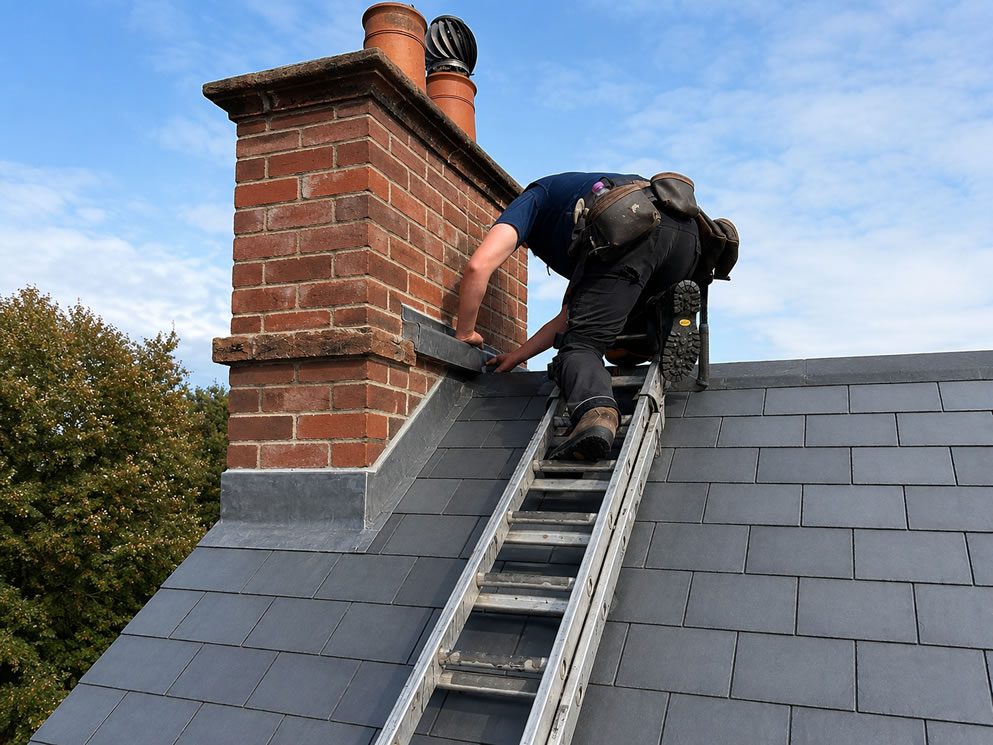
Roof leadwork repairs usually cost between £250 and £1,200 for a typical UK home. However, the final price depends on the location of the lead, the extent of the damage and how easily the roofer can reach it.
A small flashing repair beside a wall or chimney may cost a few hundred pounds. In contrast, replacing lead around all four sides of a chimney, renewing a valley or repairing a lead-covered bay roof can cost considerably more. Scaffolding may also add £500 to £1,200+ to the overall bill.
As a general guide, contractors may charge around £50 to £90 per metre for straightforward flashing work. Nevertheless, most good roofers prefer to quote for the complete job because lead thickness, detailing, access and surrounding roof repairs can all affect the amount of work involved. Current UK cost guides place routine lead flashing repairs at roughly £50 to £70 per metre, while complete chimney flashing replacement commonly costs several hundred pounds before scaffolding.
Typical roof leadwork repair cost
For most homeowners, a sensible budget is between £300 and £900 for a standard repair without major access costs. Smaller patch repairs may fall below this range, while complete replacement around a chimney, valley or dormer can exceed £1,500.
Quick roof leadwork cost summary
| Type of leadwork job | Typical UK cost |
|---|---|
| Small localised lead repair | £200 to £400 |
| Lead flashing repair | £250 to £600 |
| Lead flashing repair per metre | £50 to £90 |
| Chimney flashing repair | £250 to £500 |
| Complete chimney flashing replacement | £450 to £900 |
| Chimney leadwork replacement with scaffolding | £750 to £1,500+ |
| Lead valley repair | £350 to £800 |
| Complete lead valley replacement | £800 to £2,000+ |
| Abutment or step flashing replacement | £400 to £1,000+ |
| Leadwork around a dormer window | £400 to £1,200 |
| Lead bay roof repair | £350 to £1,000 |
| Complete lead bay roof replacement | £1,500 to £4,000+ |
| Lead roof replacement | £140 to £250+ per m² |
| Scaffolding | £500 to £1,200+ |
These prices provide a starting point rather than a fixed tariff. Roof height, lead code, access and the condition of the surrounding tiles or masonry can all change the quotation.
What is roof leadwork?
Roof leadwork forms weatherproof joints where tiles, slates, walls, chimneys and other roof features meet. Because these junctions are difficult to seal with tiles alone, roofers shape lead sheet to direct rainwater away from vulnerable areas.
You will commonly find lead around:
- chimney stacks
- roof-to-wall junctions
- valleys
- dormer windows
- parapet walls
- rooflights
- bay windows
- porches
- soil vent pipes
- small flat or curved roofs
Lead works particularly well because it is flexible, durable and easy for a skilled roofer to form around complex details. However, it still needs correct installation. Poorly sized sections, weak fixings and restricted thermal movement can cause splits, lifting and premature failure.
For most conventional flashing details, roofers commonly use Code 4 rolled lead. Meanwhile, valleys, chimney back gutters and other areas carrying greater volumes of water may require thicker lead, such as Code 5.
What does a leadwork repair quote include?
A standard leadwork quotation may cover:
- inspecting the affected roof area
- lifting nearby tiles or slates
- removing loose mortar or damaged lead
- repairing small splits or cracks
- dressing existing lead back into position
- installing new lead sections where required
- renewing mortar joints or using suitable lead fixings
- replacing disturbed tiles and slates
- testing the repaired area
- removing debris from the site
Even so, quotes vary considerably. One contractor may include replacement tiles, waste removal and photographs, whereas another may only price the leadwork itself.
Therefore, ask for a clear breakdown before accepting the work. In particular, check whether the price includes scaffolding, surrounding roof repairs and making good any disturbed brickwork.
Roof leadwork cost by type of repair
Small lead flashing repair cost
Minor damage may involve one lifted edge, a loose section or a small split in otherwise serviceable lead.
Typical cost
£200 to £400
The roofer may reposition the lead, renew fixings, repair a joint or replace a short section. If access is easy and no tiles need replacing, the work may take only a few hours.
However, temporary sealants should not replace proper lead repairs. Although roof sealant may stop a leak briefly, it rarely provides the same long-term result as correctly formed leadwork.
Lead flashing replacement cost
Flashing protects junctions where a roof meets a wall, chimney, parapet or other vertical surface.
Typical cost
£250 to £600 for a small section
£50 to £90 per metre for straightforward work
Long runs, difficult roof pitches and detailed stepped flashing will increase the total. Furthermore, the roofer may need to remove mortar from brick joints and carefully dress new lead around the roof covering.
Chimney flashing repair cost
Chimneys are one of the most common places for leadwork to fail. They usually contain several lead components, including front apron flashing, side flashings, soakers and a back gutter.
Typical repair cost
£250 to £500 without scaffolding
A simple repair might involve renewing one side, repairing a split or replacing loose pointing. Current UK pricing places straightforward repairs close to £250, although the cost rises when several sections have failed.
Complete chimney flashing replacement cost
£450 to £900 without scaffolding
£750 to £1,500+ with scaffolding
Replacing all four sides costs more because the roofer must lift tiles, remove the existing lead and form several new pieces. The chimney size and roof pitch will also affect the labour involved.
Chimney back gutter repair cost
A chimney back gutter sits on the upper side of the chimney and diverts rainwater around the stack. Since it handles a larger amount of water, poor detailing can quickly cause leaks.
Typical cost
£350 to £800
Complete replacement may cost more if the roofer needs to rebuild the supporting structure beneath the lead or repair damaged roof timbers.
Lead valley repair cost
A roof valley carries water from two adjoining slopes towards the gutter. Consequently, it must cope with concentrated rainfall and debris.
Typical repair cost
£350 to £800
Small splits or loose sections may only require a local repair. However, corrosion, extensive cracking or badly installed joints may justify full replacement.
Complete lead valley replacement cost
£800 to £2,000+
The roofer normally needs to remove tiles from both sides of the valley, lift the old lead and inspect the boards underneath. Afterwards, they install new lead and reinstate the roof covering.
Long valleys, complex junctions and rotten supporting boards can push the price higher.
Roof-to-wall abutment flashing cost
Abutment flashing seals the point where a sloping roof meets an external wall. Extensions, garages and lean-to roofs often rely on this type of detail.
Typical cost
£400 to £1,000+
The total depends on the length of the junction and whether the roof uses individual soakers beneath the tiles or slates.
A short garage-roof abutment may sit near the lower end. Conversely, replacing a long run on a two-storey extension may need scaffolding and several days of work.
Step flashing and soaker replacement cost
Step flashing follows the lines of brick courses along a sloping roof junction. Beneath it, individual soakers sit between the tiles or slates.
Typical cost
£500 to £1,200+
This work can be labour-intensive because the roofer must lift sections of the roof covering and form several separate pieces. Moreover, hidden damage may only become visible after the tiles or slates come off.
Dormer window leadwork repair cost
Dormer windows contain several vulnerable junctions, including the cheeks, front apron, roof edges and corners.
Typical cost
£400 to £1,200
A small repair to one section may cost less. By contrast, renewing the lead around the entire dormer can cost £1,000 to £2,500+, especially when scaffolding is necessary.
Rooflight flashing repair cost
Leaks around rooflights do not always come from the window itself. Failed flashing, damaged tiles or poor installation can also allow water through.
Typical cost
£250 to £700
The roofer may need to lift the surrounding tiles, replace lead or proprietary flashing components and inspect the roofing membrane.
If the rooflight has also failed, complete replacement will cost considerably more.
Lead pipe flashing repair cost
Lead slates or pipe flashings seal the roof around soil pipes, vents and other penetrations.
Typical cost
£200 to £500
The price depends on pipe size, roof covering and access. In addition, the roofer may need to replace nearby tiles or repair damaged underlay.
Lead bay window roof repair cost
Traditional bay windows often have small lead-covered roofs. Although the area may be modest, forming corners, drips and joints correctly requires specialist skill.
Typical repair cost
£350 to £1,000
Minor repairs may involve a split seam or failed edge detail. If the lead has suffered widespread fatigue, replacement may offer better value.
Complete lead bay roof replacement cost
£1,500 to £4,000+
The cost depends on roof size, lead thickness, timber condition and the amount of detailed dressing or welding required.
Lead flat roof repair cost
Some porches, dormers and extensions have full lead roof coverings rather than tiles or felt.
Typical repair cost
£400 to £1,500
The roofer may repair an isolated split, renew a seam or replace one lead bay. Nevertheless, repeated cracking often signals a design or movement problem that requires more extensive work.
Complete lead roof replacement cost
Replacing a full lead roof involves specialist sheet-metal roofing skills. As a result, it costs considerably more than repairing ordinary flashing.
Typical cost
£140 to £250+ per m²
Simple roofs with easy access may sit closer to the lower end. Meanwhile, curved roofs, heritage detailing, lead welding and complex drainage arrangements can push the price well beyond £250 per m². Current specialist pricing guides use a broad range of roughly £90 to £250 per square metre, depending on complexity and specification.
Common reasons roof leadwork fails
Lead can last for many decades when a skilled roofer installs it correctly. Even so, several issues can shorten its life.
Thermal movement
Lead expands and contracts as temperatures change. If the installer uses sections that are too long or fixes them too tightly, the metal cannot move freely. Eventually, stress can cause ripples, tears and splits.
Good practice generally limits conventional flashing pieces to manageable lengths so they can expand safely. Guidance for rolled lead sheet commonly refers to maximum flashing sections of around 1.5 metres, with shorter lengths used in some bonded applications.
Poor installation
Incorrect laps, shallow upstands and weak fixings can allow wind-driven rain into the roof. Similarly, badly dressed corners may leave small gaps that gradually worsen.
Loose or cracked mortar
Traditional flashing often sits inside joints cut into brickwork. When the mortar fails, the lead can loosen and pull away from the wall.
Incorrect lead thickness
Lead comes in different weights, known as codes. Using material that is too light for a demanding detail can lead to distortion and early failure.
Corrosion from incompatible materials
Certain substances can react with lead or trap moisture against it. Runoff from other materials, unsuitable sealants and contact with some timbers may all contribute to deterioration.
Storm or accidental damage
Strong winds can lift poorly secured flashing. Meanwhile, ladders, falling branches and previous roofing work can puncture or distort the lead.
Movement in the building
Cracks in chimneys, parapets or adjoining walls may pull the flashing apart. In that situation, repairing the lead alone may not solve the problem.
Theft
Unfortunately, exposed lead remains a target for theft. Churches, public buildings, bay roofs and easily accessible extensions can be particularly vulnerable.
Signs that roof leadwork needs repair
Failing leadwork does not always create an obvious hole. Instead, homeowners may notice:
- damp patches near a chimney breast
- water staining on ceilings
- leaks where an extension roof meets the house
- loose or lifted metal around a chimney
- cracks across lead sections
- lead pulling away from brickwork
- missing mortar above flashing
- white staining or corrosion marks
- moss growing heavily around joints
- repeated leaks after previous sealant repairs
Water can travel along rafters and membranes before becoming visible indoors. Therefore, the damp patch may not sit directly beneath the failed leadwork.
Repairing leadwork versus replacing it
A repair usually makes sense when the lead remains in reasonable condition and the fault affects a small area. For example, the roofer might renew one flashing section, repair a split seam or refix a lifted edge.
Replacement often provides better value when:
- the lead has several splits
- previous repairs keep failing
- sections are incorrectly sized
- the wrong lead code was used
- the flashing lacks adequate laps
- widespread corrosion has developed
- the supporting boards have failed
- the original detailing directs water poorly
Although a patch costs less initially, repeated repairs can become expensive. Therefore, ask the roofer whether the proposed work offers a lasting solution or merely a temporary fix.
Additional roof leadwork costs
The cost of the lead itself may form only one part of the quotation.
Scaffolding cost
Many chimney, valley and abutment repairs need safe high-level access.
Typical additional cost
£500 to £1,200+
A small scaffold tower may cost less. However, a full scaffold around a large chimney or several elevations can cost considerably more.
Cherry picker hire
Powered access may suit buildings where scaffolding is difficult or where the repair is relatively quick.
Typical additional cost
£300 to £700+
Machine size, delivery, site access and hire duration all affect the price.
Tile or slate replacement
Roofers often need to lift the surrounding covering before replacing lead. Fragile tiles or slates may break during removal.
Typical additional cost
£100 to £500+
Natural slate, handmade clay tiles and discontinued products generally cost more to match and replace.
Chimney repointing
Loose mortar around the chimney can contribute to leaks and unstable flashing.
Typical additional cost
£400 to £1,200
Combining repointing with new leadwork may offer better value because the contractor can use the same access equipment for both jobs.
Roof timber repairs
Long-term leaks may rot battens, valley boards or roof decking.
Typical additional cost
£250 to £1,500+
The extent of the damage may only become clear once the roofer removes the tiles and old lead.
Internal plaster repairs
A leadwork leak can stain or damage ceilings and chimney breasts.
Typical additional cost
£200 to £1,000+
Allow the area to dry fully before redecorating. Otherwise, stains and moisture may return through the new finish.
Emergency call-out costs
An active leak during heavy rain may require a temporary repair before permanent work can begin.
Typical cost
£150 to £500
Even so, emergency sealant or sheeting should only act as a short-term measure.
What affects roof leadwork repair costs?
Several factors can change the final quotation.
1. Location of the leadwork
Low-level porch or bay roof repairs usually cost less than chimney work on a steep two-storey roof.
2. Size of the repair
Replacing one short flashing section takes less time and material than renewing a complete valley or full chimney detail.
3. Lead code and weight
Thicker lead costs more to buy and takes greater skill to form. Nevertheless, using the correct specification can prevent premature failure.
4. Access requirements
Scaffolding, towers and cherry pickers can add hundreds of pounds to the job.
5. Roof pitch
Steep roofs require more safety equipment and slower working methods.
6. Roof material
Slate and fragile clay tiles often take longer to remove and reinstate than standard concrete tiles.
7. Surrounding damage
Rotten boards, cracked masonry and broken tiles all increase the final cost.
8. Complexity of the detail
Straight apron flashing costs less than shaped corners, curved roofs, welded seams or intricate heritage leadwork.
9. Property location
Labour rates tend to run higher in London and the South East. Parking, permits and access restrictions may also increase costs in busy urban areas.
Regional roof leadwork prices
Prices vary throughout the UK because labour rates and operating costs differ by region.
| UK area | Typical standard lead flashing repair |
| London | £400 to £800 |
| South East England | £350 to £750 |
| South West England | £300 to £650 |
| Midlands | £275 to £600 |
| North of England | £250 to £550 |
| Wales | £250 to £550 |
| Scotland | £275 to £650 |
| Northern Ireland | £250 to £550 |
These figures do not include major scaffolding or extensive surrounding repairs. Furthermore, specialist heritage leadwork may cost more in any part of the country.
How long does leadwork repair take?
A small lead flashing repair may take half a day to one day. By comparison, replacing all the flashing around a chimney generally takes one to two days, excluding scaffold erection.
A complete valley replacement may need two to four days, especially if the roofer discovers rotten boards or damaged underlay. Meanwhile, large lead roofs and detailed heritage work can take several weeks.
Weather also affects the schedule. Heavy rain, frost and strong winds can make roof access unsafe or prevent the roofer from completing joints properly.
How long should roof leadwork last?
Correctly installed rolled lead can last for many decades. In some cases, well-maintained leadwork lasts longer than the surrounding roof tiles.
However, longevity depends on:
- correct lead thickness
- suitable bay and section sizes
- room for thermal movement
- secure but flexible fixings
- adequate laps and upstands
- sound supporting materials
- regular inspection and maintenance
Poorly fitted lead may fail within a few years. In contrast, skilled workmanship and suitable detailing can provide a very long service life.
Can roof leadwork be repaired with sealant?
Lead sealants and specialist flashing products have a place in some repair work. For instance, a roofer may use suitable materials to seal certain joints or finish a chased flashing detail.
Nevertheless, smearing general-purpose sealant over splits rarely provides a lasting repair. Temperature changes continue to move the lead, which eventually breaks the seal.
Repeated layers of black roof sealant can also hide the original fault. Consequently, proper repair becomes more difficult later.
Is leadwork repair suitable for DIY?
Most roof leadwork repairs require roofing skills, specialist tools and safe access. In addition, lead is heavy and needs careful forming to avoid cracks or weak points.
DIY may only suit:
- inspecting visible low-level leadwork from the ground
- clearing debris from an accessible flat roof
- arranging a temporary internal container during a leak
- checking whether mortar appears loose from a safe position
Use a professional when:
- the lead sits on a pitched roof
- the repair involves a chimney or valley
- tiles or slates need lifting
- new lead must be dressed or welded
- scaffolding or roof ladders are required
- the source of the leak remains uncertain
Working on a wet or damaged roof carries a serious risk of falling. Therefore, homeowners should not climb onto a roof simply to save the cost of a professional inspection.
Leadwork on listed and historic buildings
Lead is common on period properties, churches and listed buildings. Repairs may need to match the existing materials, profiles and traditional construction methods.
Like-for-like maintenance may not always require formal permission. However, work that changes the character or historic fabric of a listed building can require listed building consent. Consequently, owners should speak to the local planning authority before altering significant historic leadwork.
Specialist heritage work usually costs more because it may involve:
- thicker or traditionally specified lead
- complex hand dressing
- lead welding
- decorative details
- conservation requirements
- specialist scaffolding
- careful protection of historic materials
Questions to ask a leadwork contractor
Before accepting a quote, ask:
- What has caused the leadwork to fail?
- Can the existing lead be repaired, or does it need replacing?
- Which lead code will you use?
- Does the quote include lifting and replacing tiles?
- Will you inspect the boards beneath the lead?
- Does the price include scaffolding?
- How will the lead accommodate thermal movement?
- Are chimney pointing repairs included?
- What happens if you discover rotten timber?
- Does the work come with a written guarantee?
- Do you hold suitable public liability insurance?
- Does the price include waste removal?
Clear answers make it easier to separate a proper repair from a temporary patch.
Example roof leadwork budgets
Example 1: small flashing repair beside a wall
- inspection and local repair: £200 to £350
- replacement tiles if needed: £50 to £150
- likely total: £250 to £500
Example 2: chimney flashing repair without scaffolding
- leadwork repair: £250 to £500
- minor pointing: £100 to £250
- replacement tiles: £50 to £150
- likely total: £400 to £900
Example 3: complete chimney leadwork replacement
- new apron, side flashings and back gutter: £450 to £900
- scaffolding: £500 to £1,000
- chimney pointing repairs: £200 to £600
- likely total: £1,150 to £2,500
Example 4: complete lead valley replacement
- removal and replacement of lead valley: £800 to £1,500
- access equipment: £300 to £800
- valley board and tile repairs: £200 to £700
- likely total: £1,300 to £3,000
Example 5: lead bay roof replacement
- old lead removal: £200 to £500
- new lead covering: £1,200 to £2,500
- timber and edge repairs: £200 to £800
- likely total: £1,600 to £3,800
Is roof leadwork repair worth the cost?
Repairing failed leadwork can prevent a relatively small leak from causing widespread damage. Water entering around a chimney or valley may damage battens, roof timbers, insulation, plaster and decorations.
Acting early usually keeps the work more manageable. In contrast, leaving the leak for several winters can turn a simple flashing repair into a larger roofing and internal refurbishment project.
A properly completed repair should deal with the underlying fault rather than simply cover it with sealant. Therefore, good workmanship often provides better value than choosing the lowest initial quotation.
FAQs about roof leadwork repair costs
How much does roof leadwork repair cost in the UK?
Most roof leadwork repairs cost between £250 and £1,200. A small localised repair may cost less, while complete chimney, valley or dormer leadwork replacement can cost considerably more.
How much does lead flashing repair cost per metre?
Straightforward lead flashing repairs commonly cost around £50 to £90 per metre. However, roof height, access and the type of flashing can affect the final price.
How much does chimney lead flashing repair cost?
A basic chimney flashing repair usually costs around £250 to £500 without scaffolding. Replacing all the chimney leadwork may cost £450 to £900, plus access costs.
How much does chimney leadwork cost with scaffolding?
A complete chimney leadwork job with scaffolding often costs between £750 and £1,500+. Pointing, tile replacement and timber repairs may increase the total further.
How much does a lead valley repair cost?
A local lead valley repair generally costs £350 to £800. Full valley replacement typically costs between £800 and £2,000+, depending on length and access.
Can split lead flashing be repaired?
Yes, small isolated splits can sometimes be repaired. However, repeated cracking may indicate that the lead sections are too long, incorrectly fixed or unsuitable for the detail.
Should old lead flashing be replaced?
Not necessarily. Lead in otherwise sound condition may only need a local repair or refixing. Widespread cracks, corrosion or poor original installation may make replacement more economical.
Does leadwork repair include replacing roof tiles?
Not always. Some roofers include a small number of replacement tiles, while others charge separately. The written quote should explain what happens if tiles break during removal.
Do I need scaffolding for lead flashing repair?
Scaffolding is not always necessary for low-level or easily accessible work. However, chimney, high abutment and steep-roof repairs often need safe access equipment.
How long does new roof leadwork last?
Correctly specified and installed leadwork can last for many decades. Its lifespan depends on lead thickness, detailing, thermal movement and the condition of the surrounding roof.
Final thoughts
Roof leadwork repairs in the UK usually cost between £250 and £1,200, although complex jobs can run into several thousand pounds. Small flashing repairs sit towards the lower end, whereas complete chimney, valley and lead roof replacement costs considerably more.
For a basic chimney repair without scaffolding, allow around £250 to £500. Meanwhile, replacing the lead around the entire stack may cost £450 to £900, before any access, pointing or tile repairs.
The cheapest quotation may involve little more than sealant and a short-term patch. By contrast, a lasting repair should account for the condition of the lead, correct overlaps, thermal movement and surrounding roof defects.
Before choosing a roofer, compare the full specification rather than price alone. In particular, check the proposed lead code, access arrangements, tile reinstatement and whether the quote includes scaffolding and waste removal.