
This guide covers:
- the most common guttering jobs (cleaning, repairs, replacement, downpipes)
- typical UK costs and what affects them
- material choices (uPVC, aluminium, cast iron, steel)
- DIY vs professional installation costs
- where to buy guttering materials in the UK
- regional price differences (London vs the rest)
Quick cost overview
Use these as “sanity check” ranges before you get quotes:
- Gutter cleaning (typical home): £75–£200 (higher for tall/awkward access)
- Minor gutter repairs: £100–£300
- Partial replacement (one elevation / section): £250–£900
- Full replacement (typical house): £800–£2,500+ (more if cast iron/aluminium, scaffolding, or complex rooflines)
Guttering prices move the most because of access and how much is being replaced.
The most common guttering jobs (what roofline trades get asked to do)
1) Gutter cleaning
This can mean:
- removing leaves/moss and debris
- flushing the run (sometimes)
- checking for leaks at joints during/after cleaning
Typical price range: £75–£200 for a standard house.
Common higher-cost scenarios: 3-storey homes, tight access, conservatories underneath, heavy blockages, and “gutter vacuum” jobs with lots of plant equipment.
Regional difference example (typical ranges):
- London: £80–£150
- South East: £70–£130
- North West: £60–£120
- Wales: £50–£100
- Scotland: £60–£110
(These are typical guide ranges — local demand and access can push outside them.)
Pro tip: cleaning is often cheaper when booked as a regular maintenance job rather than an urgent “overflowing in a storm” callout.
2) Fixing leaking gutter joints
Leaking joints are one of the most common repairs and usually come down to:
- worn rubber seals
- joints not seated properly
- dirt/grit in the joint
- brackets letting the gutter sag so water pools at the joint
Typical price range: £100–£250 for a small repair visit (often a minimum call-out applies).
If multiple joints need reseating/seal replacement across a run, it can rise into the £250–£450 range.
3) Replacing gutter brackets / correcting sagging gutters
If the gutter “dips” and holds water, leaks and overflow become much more likely.
Typical price range: £120–£350 depending on how many brackets, whether the fascia is sound, and access.
If fixings are pulling out because fascias are rotten, you’re into roofline timber work (see the roofline section below).
4) Downpipe repairs and blockages
Common requests:
- leaking downpipe joint
- downpipe disconnected
- overflowing hopper during heavy rain (often a blockage lower down)
Typical price range: £100–£300 for a small repair/unblock visit.
Replacement downpipe (per run): often £150–£450 depending on height, fittings, and access.
5) Replacing a section of guttering (partial replacement)
This is usually done when:
- the gutter is cracked/split
- it’s warped/twisted so it won’t hold correct fall
- the profile is damaged or badly installed
Typical price range: £250–£900 depending on metres replaced, corners/offsets, and access.
Common “quote trap”: one quote includes disposal + making good and another doesn’t. Always ask.
6) Full gutter replacement (whole house)
This is common when:
- multiple joints leak across several elevations
- gutters are brittle and cracking
- the fall is wrong across long runs
- you want to upgrade material (e.g., uPVC → aluminium)
- you’re replacing fascias/soffits at the same time
Typical price range:
- uPVC replacement (typical house): £800–£1,800
- aluminium replacement: £1,500–£3,500+
- cast iron replacement/renewal: can be significantly higher (materials + labour + painting/maintenance)
Large detached homes, complex rooflines, and scaffolding can push totals higher.
7) Gutter guards / hedgehogs / leaf protection
These can reduce leaf build-up but aren’t “set and forget” forever (fine debris can still accumulate).
Typical price range: £5–£20 per metre supply-only (varies by product), plus fitting if needed.
They make the most sense when:
- you have overhanging trees
- gutters block frequently
- access is difficult so regular cleaning is expensive
Guttering materials and styles (what you’re paying for)
uPVC (most common)
Pros: cheapest, widely available, easy to repair/replace sections, lots of profiles.
Cons: can warp in heat, can become brittle with age, seals/joints are common failure points.
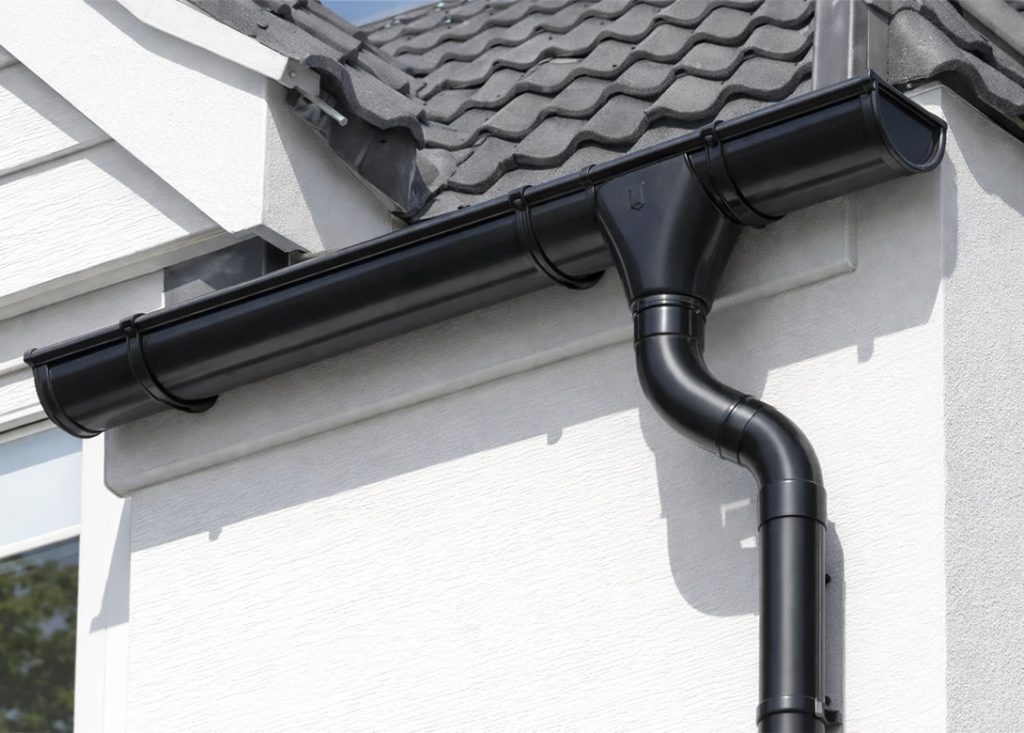
Common profiles:
- half round (very common, good all-rounder)
- square line (more modern look)
- ogee (decorative, often used on older homes)
- deep flow (handles more rainwater; useful for larger roofs)
Aluminium (premium but popular)
Pros: long life, neat finish, often made-to-measure on site (fewer joints), good for modern upgrades.
Cons: higher cost, depends on installer system.
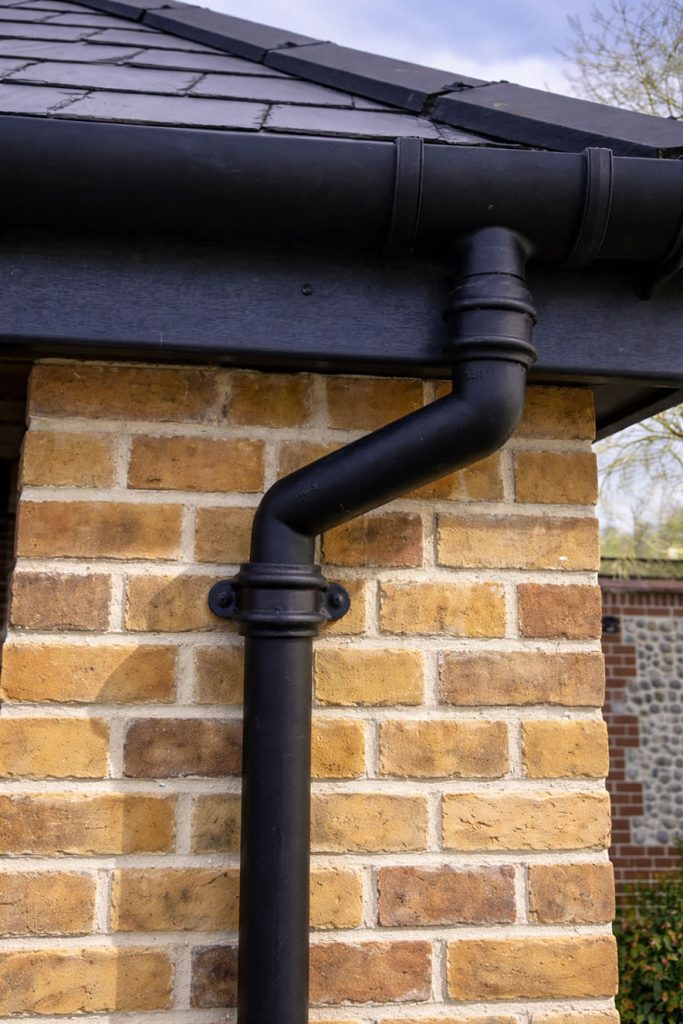
Cast iron (often on period properties)
Pros: authentic look, very robust.
Cons: heavier, more labour, needs maintenance (painting), sections can be expensive.
Steel / galvanised / zinc / copper (less common domestically)
Typically used where durability or aesthetics are a priority. Copper is premium and usually chosen for high-end aesthetics rather than “value”.
DIY guttering: what it costs and what you need to budget for
DIY can be cost-effective if you’re confident working at height safely (many people aren’t — and that’s fine). If your gutters are on a 2-storey house and you’d need ladders, roof ladder, or tower access, professional installation may be safer and more economical in the long run.
DIY material costs (rough guide)
For standard uPVC:
- A typical 4m gutter length is often in the teens of pounds
- Brackets, unions, stop ends, corners, outlets, and downpipe fittings add up quickly
- Sealants, screws, and wall plugs are small extras but still part of cost
DIY shopping list (typical job)
- gutter lengths (estimate total metres)
- fascia brackets (often spaced around 1m apart, sometimes closer depending on system/conditions)
- unions/joiners
- internal/external angles
- stop ends
- outlets
- downpipe lengths + bends + clips
- hopper (if required)
- gutter sealant (if specified by the system)
- fixings and drill bits
DIY cost example (very rough)
For a typical 3-bed semi requiring ~20–25m of gutter plus 2–3 downpipes:
- uPVC materials only: often lands somewhere around £200–£600 depending on profile, number of corners, and how many downpipe runs.
That’s materials only. It doesn’t include tower hire, tools, waste disposal, or “making good”.
Where to buy guttering materials in the UK (common options)
For DIY and trade purchase, you’ll commonly find uPVC systems at:
- Wickes
- Screwfix
- Toolstation
- B&Q
Trade merchants often have more options (including aluminium systems and trade-grade accessories):
- Travis Perkins
- Jewson
- Selco
- local builders’ merchants
- specialist roofing/roofline suppliers (often better for aluminium or hard-to-match profiles)
Tip: If you’re matching an existing profile (especially ogee), take a photo and measure it before you buy. Profiles aren’t always interchangeable between brands.
Regional differences: why London and the South East cost more
You’ll often see higher labour costs in:
- London
- South East England
- other high-cost cities
Reasons:
- higher labour rates
- parking/access issues (especially terraces and flats)
- more frequent need for safe access equipment in tight streets
A job that’s £120 in one region might be £180+ in London once travel, parking and labour rates are factored in.
What affects guttering quotes the most
1) Height and access
- bungalow vs 2-storey vs 3-storey
- conservatories or extensions below gutters
- narrow side access / terraced streets
Access can be the biggest difference between two quotes.
2) Scope: repair vs replacement
A “repair” quote might include reseating 1 joint. Another might recommend replacing a whole run because it’s warped and the fall is wrong. Both may be “right” depending on condition.
3) Material choice
uPVC is usually cheapest. Aluminium/cast iron costs more.
4) Fascia condition
If the fascia board is rotten, simply screwing new brackets into it won’t last. Expect additional roofline timber work.
5) Water testing and flushing
Some companies include a full flush test and minor adjustments. Others don’t. Ask what you’re getting.
How to compare gutter quotes properly (copy/paste checklist)
Ask each contractor to confirm:
- Exactly what is included (cleaning, flushing, resealing joints, replacing brackets, replacing metres)
- Material and profile (half round/square/ogee/deep flow; uPVC vs aluminium vs cast iron)
- Downpipes included? (how many, what height, any offsets)
- Access method included? (ladders, tower, scaffold)
- Waste removal included?
- Guarantee (what it covers: leaks at joints, workmanship, parts)
Common “extras” people forget to budget for
- fascia/soffit replacement (often discovered once old gutters are removed)
- replacing rotten rafter ends at eaves (more serious)
- new gutter outlets/hoppers to improve flow
- adding an extra downpipe to reduce overflow on large runs
- re-routing downpipes to prevent water pooling at a doorway/path
FAQs
How much does gutter cleaning cost in the UK?
Many households pay around £75–£200 for a standard clean, with higher prices for 3-storey or awkward access jobs.
Is it cheaper to repair gutters or replace them?
Repairs are cheaper when the problem is local (one joint, one bracket, one downpipe). Replacement often makes more sense when multiple joints leak, the gutter is warped/brittle, or the fall is wrong across long runs.
What is the cheapest gutter material?
uPVC is usually the cheapest and most widely installed option.
Do I need to replace downpipes when replacing gutters?
Not always, but it can be efficient to do both together—especially if downpipes are discoloured, cracked, or poorly routed.
Why do gutters overflow in heavy rain even after cleaning?
Common causes are the gutter fall being wrong, the downpipe partially blocked, the gutter being too small for the roof area, or water overshooting due to roof issues.